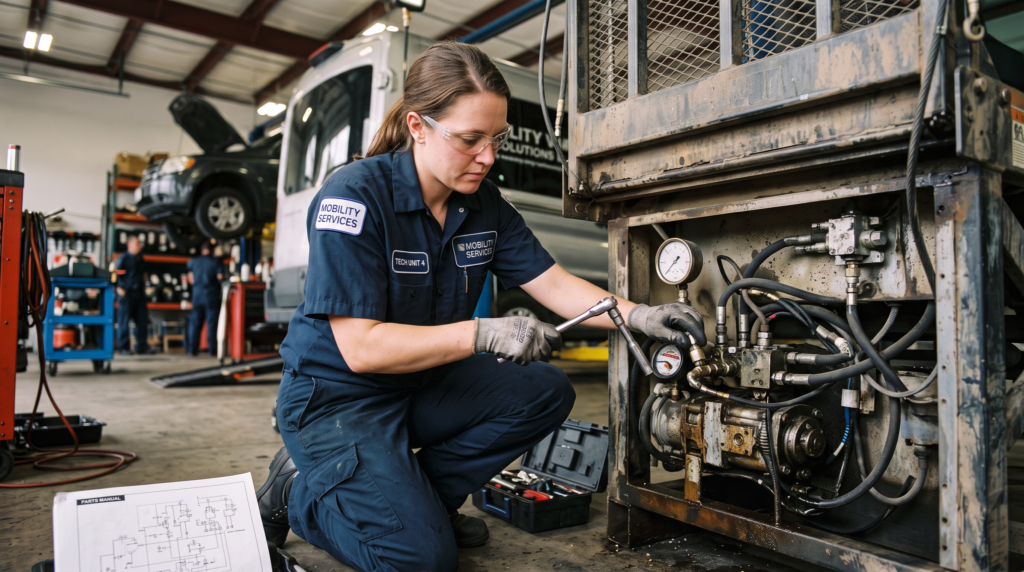
With the nation’s largest commercial vehicle inventory, full of best-selling makes and models, Model 1 is the place to start and end your search for the right vehicle, or an entire fleet.
We’re committed to providing you with all the services you need to manage your fleet — not just at the start, but for the entire lifecycle for every vehicle in your operation.
With access to the nation’s largest commercial vehicle inventory, we can help you find exactly what you need for your fleet. And when the right solution doesn’t exist, we’ll help create it.
Your shuttle has been in the shop twice this quarter. Your team found a way to get everyone where they needed to go, but it took a last-minute call to an outside transportation provider and a rescheduled doctor’s appointment.
Every senior living community reaches this point with a vehicle eventually. The question isn’t whether to pay for this repair – it’s whether to keep paying for bus maintenance on a vehicle that keeps letting you down. With next year’s capital budget taking shape this fall, now is the time to add up what your shuttles are really costing you.
The Cost of Another Year on an Aging Shuttle
A repair invoice is the easiest cost to see, but it’s only part of the picture. The rest shows up across your community:
Missed or rescheduled trips. When a vehicle goes down, residents miss the medical appointments, outings, and errands they planned their week around. A missed appointment can take weeks to rebook, and a canceled outing affects every resident who signed up.
Staff time. Every breakdown pulls someone away from their own job – hours your team could have spent with residents or making sure their regular work gets done.
Fill-in transportation. Rideshares, rentals, and outside providers add up quickly, and they may not be able to carry residents with accessibility needs.
None of these costs appear on a repair invoice, but all of them belong in your repair-or-replace decision.
There’s no single number that tells you when a shuttle is done. These five questions can help you make the call:
1. How old is it, and how hard has it worked?
Age and mileage are a starting point, not the answer. For reference, the Federal Transit Administration’s default useful life benchmarks for transit agencies are 10 years for a cutaway bus and eight years for a van.
Short trips with constant stops, idling, and lift cycles wear on a shuttle faster than the odometer suggests.
2. How often is it in the shop?
Ask your service provider for repair history by system, such as engine, transmission, electrical, HVAC, and lift – and track days out of service, not just visitsIf visits are climbing or the same system keeps failing, reliability is slipping.
3. Is wheelchair lift repair becoming routine?
Accessibility equipment cycles on nearly every trip, and a lift or ramp problem can cancel a trip on its own. If wheelchair lift repair is becoming routine but the rest of the vehicle is sound, the lift can often be rebuilt or replaced by itself.
A Model 1 inspection will tell you how much life your lift has left. Our certified technicians can inspect your wheelchair lift or ramp at our service center or come to you with mobile service where available, then recommend the repairs that will keep it running reliably.
4. What will the next repair buy you?
Before you approve another shuttle bus repair, add the past 12 months of repairs to the one in front of you. If that total is starting to rival a year of lease or finance payments on a new vehicle, it may be time to price a replacement.
5. Does it still fit your residents?
Communities change. Your vehicle may no longer fit your residents if:
More residents use wheelchairs or walkers than when you bought it, and you need more wheelchair positions or low-floor boarding.
Drivers are making two trips where one used to do.
Residents who use wheelchairs can’t always get a spot.
Check the lift’s rated capacity, too. The ADA vehicle standard sets a 600-pound minimum, and heavier power chairs with their riders can come close to that – many current commercial lifts are rated for 800 or 1,000 pounds.
Bus Maintenance Best Practices That Buy You Time
Whether you replace this year or next, these fleet maintenance best practices keep your current shuttle reliable while you decide:
Test the lift every morning. A quick cycle before the first trip catches problems before a resident is waiting – our technicians can service your lift at our service center or come to you with mobile service, where available.
Schedule service around real use. Frequent stops, idling, and heavy lift use add wear that mileage doesn’t show – Model 1 can help you build a service plan that makes sense for your fleet.
Look beyond compliance. Meeting state and federal requirements is the minimum – we know what’s required and can recommend repairs that keep your shuttle reliable beyond it.
Protect your warranty. Skipped maintenance can put coverage at risk – we help you track your coverage, handle required service, and complete covered warranty repairs.
Good maintenance buys you time to plan, and Model 1 can help you use it well. Our service team can set a schedule that fits your shuttle, at a Model 1 service center or on-site where available.
Downtime doesn’t have to mean missed trips. Explore Model 1 vehicle rentals.
Don’t Wait to Decide
If replacement is where you’re landing, get it into next year’s capital plan now. Waiting until the vehicle fails turns a planned purchase into an emergency, with fewer choices and more pressure on your team.
Your current vehicle can still help. A trade-in puts its remaining value toward the replacement, and financing or leasing can spread the cost to fit your budget cycle.
Nonprofit communities may also qualify for the Federal Transit Administration’s Section 5310 program, which helps fund accessible vehicles for organizations serving older adults and people with disabilities. Each state runs its own application cycle, so check timing early.
Ready to Make the Call?
Model 1 works with senior living communities across the country to keep their residents moving. Our team can help you:
Compare your options to repair, refurbishor replace each vehicle you have today.
Find the right accessible configuration for your residents now and in the years ahead.
Plan the purchase, trade-in, and financing around your budget.
FAQ: Repair or Replace for Senior Living Shuttles
Q: When is a shuttle too old or high-mileage?
There’s no single cutoff. The Federal Transit Administration’s default useful life benchmarks for transit agencies are 10 years for a cutaway bus and eight years for a van, but how often the vehicle is in the shop, the condition of the lift or ramp and whether it still fits your residents matter just as much.
Q: What are early signs a vehicle is becoming unreliable?
More frequent repairs, more days out of service, a lift or ramp that hesitates or needs repeated adjustment, and trips your team has to cover with a backup are all early signs.
Q: How often should a commercial wheelchair lift or ramp be serviced?
Follow your equipment manufacturer’s schedule. Many lift manufacturers base it on cycles rather than months. BraunAbility, for example, recommends maintenance every 750 cycles. Regular service is the best way to avoid an unplanned commercial wheelchair lift repair, and a daily check before the first trip catches small problems early. If a bus wheelchair lift repair is needed, have it done by technicians trained on that lift.
Q: What warranty and service support should we expect?
Ask what’s covered on the base vehicle and the accessibility equipment, for how long, and where the work can be done. If your vehicle is still under a commercial vehicle warranty, Model 1 can complete covered warranty repairs.
Q: What should our backup plan be when the shuttle is down?
Put it in writing: a second vehicle, a short-term rental or an approved outside provider that can transport residents who use wheelchairs. Share it with every driver and coordinator.
Images may be AI-generated or enhanced and are for illustration only.