Ownership Tips
How to Find the Right Wheelchair Accessible Van
Investing in an ADA-compliant van makes day-to-day life more convenient for people with disabilities. Getting the right model starts with understanding your options and what to look for — from ADA requirements to how today’s purpose-built conversions compare to pioneers like the MV-1. Below is a full buying guide, then check our inventory and ask us about shipping one to your door anywhere in the U.S.
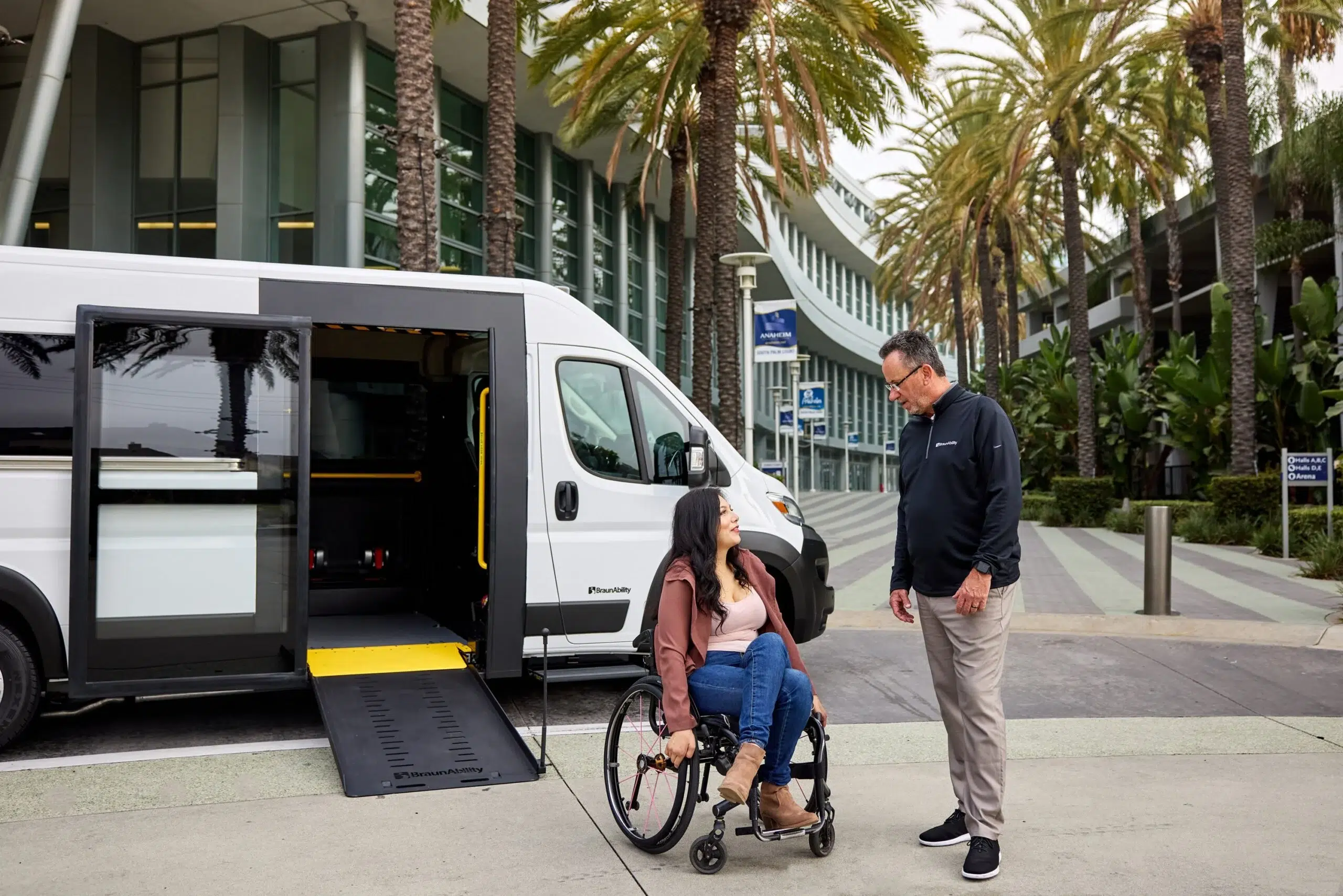
Why Make the Switch
- Independence. Wide doorways and low-step entry mean getting in and out without help. Some vans let you use the wheelchair itself as the seat, or transfer in without needing a second pair of hands.
- Comfort. Standard vehicle seating isn’t built around a disability. An ADA-compliant van allows for customized ergonomics, whether you’re riding in the wheelchair or a modified seat.
- Cost. The alternative to buying purpose-built is converting an existing vehicle. After budgeting both routes, many buyers find a new ADA-compliant van is more affordable than retrofitting one.
Financing options — including loans and leasing — can make a new van more accessible than expected. See our financing options.
What Makes a Van ADA-Compliant
ADA compliance is a set of standards for how safely and independently a wheelchair user can board and ride. Look for:
- A ramp (manual or power) meeting ADA/CSA slope and non-skid requirements — typically 1:4.4 for short deployments, 1:6 for longer ones
- A universal wheelchair restraint/track system built into the floor
- A safety interlock preventing operation while the ramp is deployed
- FMVSS safety certification, including reinforced bumpers and side-impact protection
- Enough doorway width and headroom to board comfortably
For the full federal standard, see the U.S. Access Board’s ADA Accessibility Guidelines for Transportation Vehicles, or download Model 1’s own ADA Vehicles Guide for a deeper walkthrough.
Purpose-Built vs. Converted Vans
There are two paths: a van built for accessibility from the ground up, or “adaptive equipment” installed aftermarket in a standard van. Conversions can work, but bolting accessibility onto a vehicle not designed for it often means tighter clearances and less integrated ramp and restraint systems. A purpose-built van has these features native to the vehicle rather than retrofitted — generally the safer, more comfortable choice if accessibility is a daily need.
| Purpose-Built (e.g. MV-1, factory-built conversions) | Converted / Adaptive Equipment | |
| Design origin | Built around ADA guidelines from the ground up | Standard van retrofitted with aftermarket equipment |
| Ramp & restraint integration | Native to the vehicle — better clearance, tighter tolerances | Bolted on afterward; can mean tighter clearances |
| Best for | Daily, long-term accessibility needs | Occasional need, or budget-driven conversions |
| Typical cost trade-off | Higher upfront, less compromise | Often cheaper, more variability in fit/finish |
Commercial & Fleet Use
With more than 3.3 million wheelchair users in the U.S. — a number expected to rise — fleet and government buyers should plan for accessible capacity now. Purpose-built vans avoid the slow, clunky retrofitted lifts common on shuttles and buses. Look for models that can:
- Transport two wheelchair occupants at once (front passenger position and main cabin)
- Up-fit for taxi or paratransit service while still seating ambulatory passengers
- Run on gasoline or CNG, which suits fixed short routes and can cut fuel costs 15–50% per equivalent gallon with less maintenance
- Qualify for manufacturer fleet incentives — worth asking your dealer

Spotlight: The MV-1’s Legacy — and What’s Available Today
The MV-1 was the industry’s first factory-direct, ADA-compliant vehicle built from the ground up rather than converted — a genuine milestone, with features that were ahead of their time:
- Seating for up to 5, including ambulatory riders
- Wide doorways, low-step entry, under-floor integrated ramp with two deployment aspect ratios, plus one-touch electronic control on higher trims
- Universal floor-mounted restraint track system
- FMVSS-certified, reinforced bumpers, side-impact beams, ramp-deployment interlock
- Minimum 3-year/36,000-mile warranty
Production of the MV-1 ended in 2016, and it is no longer manufactured — it exists today only on the used market. If you’re comparing it to current options, the closest modern equivalents are purpose-built conversions from manufacturers like BraunAbility and Vantage Mobility, which apply the same design principles (integrated ramps, floor-mounted restraint systems, FMVSS-certified builds) to current platforms such as the Chrysler Voyager, Toyota Sienna, and RAM ProMaster.
Browse our current wheelchair accessible van inventory to see what’s in stock now.
What to Look For Before You Buy
- Size and capacity — match the model to your chair dimensions and passenger count, not just budget
- Ramp type — manual vs. power, and deployment speed
- New vs. converted — whichever is more financially and practically sound for your situation
- Commercial vs. personal use — fleets prioritize durability and capacity; personal buyers prioritize comfort
- Insurance — accessible vans carry different considerations; get quotes before committing
- An accredited, experienced dealer — look for NMEDA-affiliated dealers; more moving parts than a standard purchase means generalist dealerships often aren’t enough
- First-hand recommendations — if you know others who’ve bought one, ask what they’d choose again
The National Mobility Equipment Dealers Association (NMEDA) maintains a directory of accredited mobility dealers if you want to verify one near you.
Get support when choosing
Shopping for an ADA-compliant van can feel overwhelming — that’s what we’re here for.
View Current Inventory | Talk to a Mobility Specialist
Let us know your needs — passenger count, wheelchair positions, personal or fleet use — and we’ll help match you to the right van and get it shipped anywhere in the U.S.

FAQ: Choosing a Wheelchair Accessible Van
Q: What’s the difference between a purpose-built and a converted wheelchair van?
A purpose-built van is engineered around ADA guidelines from the start, so ramps and restraint systems are native to the vehicle. A converted van is a standard vehicle retrofitted with aftermarket accessibility equipment — often more affordable, but with more variability in fit and finish.
Q: Is the MV-1 still available to buy new?
No — production ended in 2016. It’s available only on the used market today. Current purpose-built options come from manufacturers like BraunAbility and Vantage Mobility.
Q: How do I know if a van is ADA compliant?
Look for a ramp meeting ADA/CSA slope requirements, a floor-integrated restraint system, a ramp-deployment safety interlock, and FMVSS safety certification. The U.S. Access Board’s ADA Accessibility Guidelines cover the full federal standard.
Q: Should I buy or finance a wheelchair accessible van?
It depends on your budget and how long you plan to keep the vehicle. Financing can lower the upfront cost of a purpose-built van, sometimes making it more affordable than converting an existing vehicle outright.
Q: What should fleet and commercial buyers look for differently than personal buyers?
Fleets should prioritize durability, multi-passenger wheelchair capacity, and up-fit options for taxi or paratransit use, while personal buyers typically prioritize comfort and day-to-day ease of use.
Images displayed in this material may be generated or enhanced using artificial intelligence (AI) and are for illustrative purposes only.